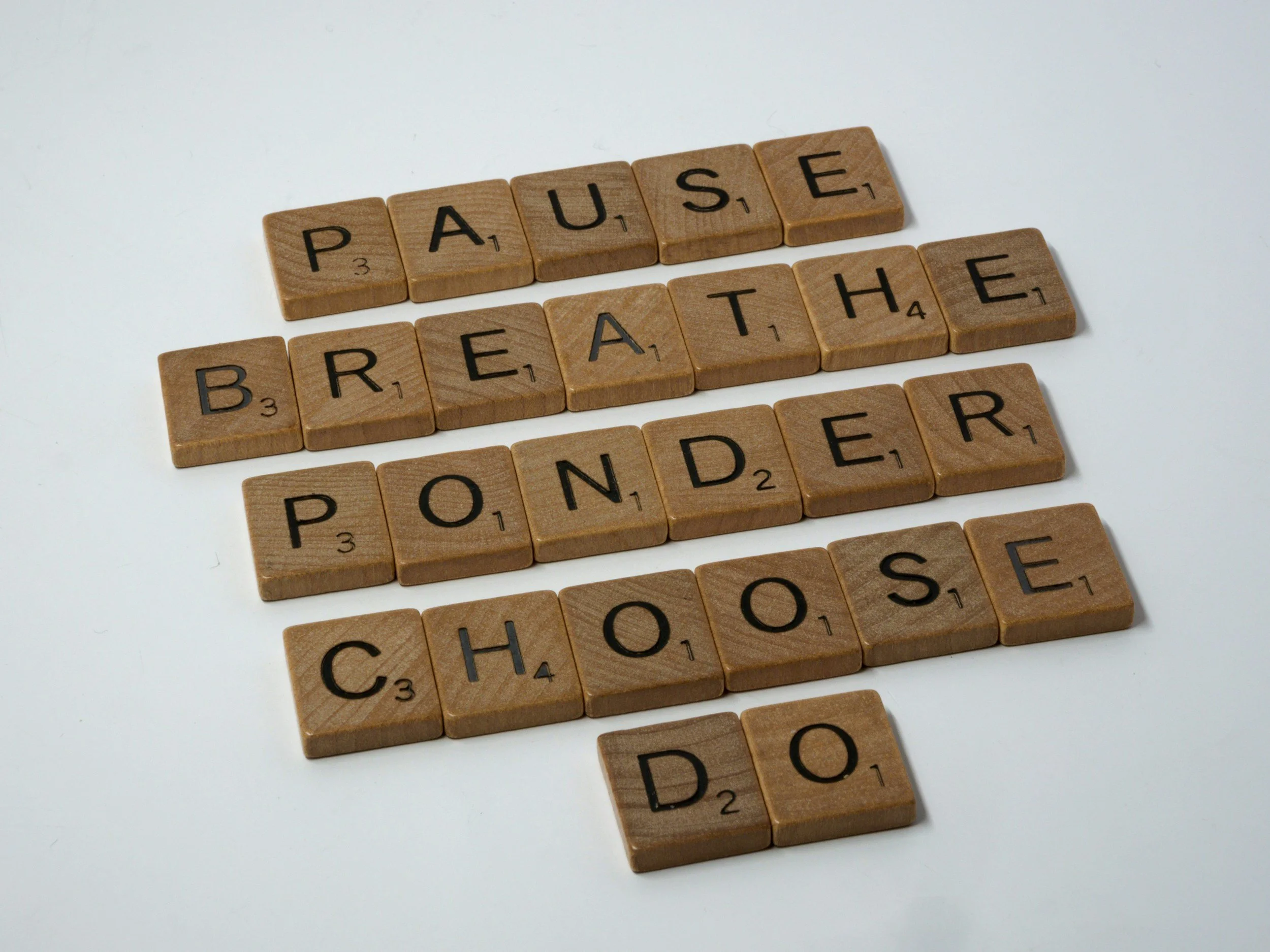

You’re Functioning. But You’re Running on Empty: Recognizing Burnout
From the outside, you may look completely fine.
You’re meeting deadlines. Showing up for your family. Answering emails. Managing your responsibilities. Getting things done.
People may even describe you as capable, successful, or someone who “has it all together.”
But underneath it all, you’re exhausted.
You have less patience than you used to. Small things feel disproportionately frustrating. Your mind doesn't seem to shut off. You may be sleeping but not feeling rested, or taking time off without actually feeling refreshed.
And you might be wondering:
Why am I so tired when nothing is technically wrong?
Sometimes, the answer is burnout.
Burnout Doesn't Always Look Like Falling Apart
We often imagine burnout as reaching a point where you can no longer function. You may continue performing at a high level while feeling increasingly depleted internally.
You keep going because that's what you've always done.
You push through.
You take care of everyone else.
You tell yourself you'll rest when things calm down.
But things rarely seem to calm down.
Over time, the gap between how you're functioning and how you're actually feeling can become increasingly difficult to ignore.
What Does Burnout Feel Like?
Burnout can affect much more than your energy. It can influence the way you think, feel, behave, and relate to other people.
You might notice:
Mental and cognitive changes
Difficulty concentrating
Forgetfulness or brain fog
Trouble making decisions
Feeling mentally scattered
Less creativity or motivation
Constantly thinking about work or responsibilities
Emotional changes
Irritability or a shorter fuse
Feeling overwhelmed by things that once felt manageable
Emotional numbness or detachment
Losing enthusiasm for things you normally enjoy
Feeling cynical, resentful, or discouraged
Feeling like everything has become an obligation
Physical changes
Persistent fatigue
Difficulty sleeping or feeling rested
Muscle tension or headaches
Changes in appetite
Feeling physically worn down
Getting sick more frequently
Behavioral changes
Procrastinating more than usual
Avoiding tasks you would normally handle easily
Working longer while accomplishing less
Withdrawing from friends or activities
Having difficulty setting boundaries
Saying yes when you really want to say no
Struggling to disconnect from work
You don't have to experience every one of these symptoms to be struggling with burnout.
The “I Should Be Fine” Trap
One of the most difficult things about burnout can be recognizing it in yourself.
You may look at your life and think:
“I should be grateful.”
“Other people have it much harder.”
“I'm getting everything done.”
“I just need to get through this busy period.”
“I'll rest once this project is finished.”
But burnout isn't necessarily about whether your life looks successful from the outside.
It's about whether the way you're living and working is sustainable.
You can be grateful and exhausted.
You can be successful and overwhelmed.
You can love your career and still need a different relationship with work.
You can be high-functioning and still be struggling.
When Achievement Becomes Unsustainable
For many people, the qualities that helped them succeed can also make burnout harder to recognize.
You're responsible.
You care about doing things well.
You don't like letting people down.
You have high standards.
You may be accustomed to pushing through discomfort rather than stopping to ask what you actually need.
These qualities aren't inherently problematic. In fact, they may be part of what makes you successful.
The challenge comes when achievement requires you to continually override your own limits.
When “I can handle it” becomes “I have to handle everything.”
When perfectionism makes “good enough” feel unacceptable.
When rest feels unproductive.
When saying no feels selfish.
When slowing down feels like falling behind.
Eventually, your mind and body may begin sending signals that your current pace isn't sustainable.
Burnout Isn't Always a Sign That You Need to Do Less
Sometimes the answer isn't simply to quit your job, take a vacation, or completely change your life.
Sometimes it's about understanding how you're operating within your life.
Are you carrying responsibilities that don't actually belong to you?
Are your expectations realistic?
Do you have boundaries around your time and availability?
Can you tolerate disappointing someone?
Can you allow something to be good enough?
Can you rest without feeling guilty?
Can you recognize that you're overwhelmed before you reach your breaking point?
These questions can lead to something deeper than simply managing stress.
They can help you develop a more sustainable relationship with achievement, responsibility, and yourself.
What If You Don't Want to Give Up Your Ambition?
You don't have to.
Seeking support for burnout doesn't mean you're giving up your ambition or lowering your standards.
It can mean learning how to pursue what matters to you without constantly sacrificing yourself in the process.
Therapy can provide a space to step out of the cycle of constantly doing and begin paying attention to what's happening internally.
You can learn to recognize your emotional signals earlier, understand your patterns, establish healthier boundaries, and make choices from a place of greater clarity rather than exhaustion.
The goal isn't necessarily to do less.
It's to create a way of living that you can actually sustain.
A Place to Start
If you recognize yourself in this, you don't have to wait until you're completely burned out to make a change.
Start by noticing.
What is your body telling you?
What has become harder than it used to be?
Where are you constantly pushing through?
What are you saying yes to that you actually want to say no to?
When was the last time you felt genuinely rested—not just caught up?
And perhaps most importantly:
If nothing about your current pace changed, how would you feel six months from now?
Sometimes that question is enough to tell you that something needs to change.
Burnout doesn't have to mean that you've failed.
It may simply be information.
Information that your current way of working, achieving, giving, and coping may no longer be working for you.
And paying attention to that information can be the beginning of doing things differently.
A therapeutic space
Therapy can be a space to explore burnout, chronic stress, emotional overwhelm, perfectionism, boundaries, and the patterns that keep you running on empty.
You don't have to choose between achievement and wellbeing.
You can learn to pursue both.
If you'd like to explore whether therapy might be a good fit, I offer complimentary phone consultations.