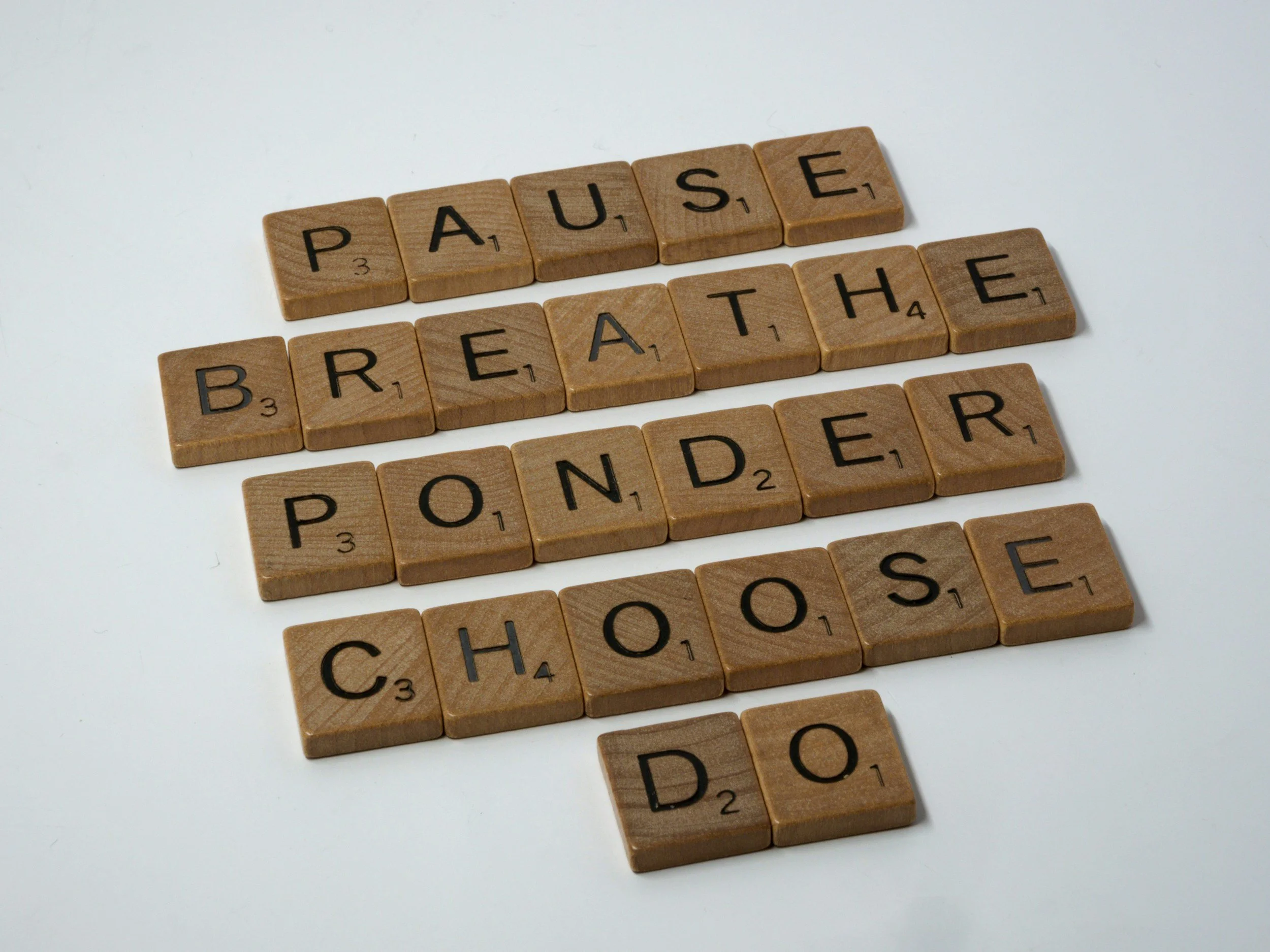
Pause before reacting. Say no without overexplaining. Let something be “good enough.” Choose rest between challenges.
We often think wellbeing requires a major life overhaul.
A new routine. A better schedule. More exercise. Less stress. A vacation. A completely different job.
But sometimes the most meaningful changes are much smaller.
They happen in the moments when we choose not to push, fix, explain, respond, or perfect.
A pause before reacting.
A simple “no” without a five-minute explanation.
The decision to stop when something is good enough.
A few quiet minutes between one challenge and the next.
These choices may look insignificant from the outside. Psychologically, they can be powerful.
Pause Before Reacting
When something frustrates, disappoints, or overwhelms us, our first impulse is often to respond immediately.
Send the email.
Defend yourself.
Correct the misunderstanding.
Say what you really think.
Fix the problem.
But an emotional reaction and an intentional response are not the same thing.
A pause creates space between what happens and what you do next.
That space can be as simple as taking one breath before responding to a difficult message or telling someone, “Let me think about that and get back to you.”
The goal isn't to suppress your emotions. It's to give yourself enough room to notice them without allowing them to make the decision for you.
Ask yourself:
“What am I feeling right now, and what response will actually serve me?”
Sometimes the best response is immediate.
Sometimes it is tomorrow.
Say No Without Overexplaining
For many people, saying no can feel surprisingly uncomfortable.
So instead of simply saying no, we explain.
We apologize.
We provide context.
We offer alternatives.
We make sure the other person understands that we're still a good, caring, responsible person.
But a boundary doesn't become more legitimate because you've built a convincing case for it.
“No, I can't take that on right now” can be enough.
“I’m not available for that” can be enough.
“Thank you for thinking of me, but I’ll pass” can be enough.
You don't have to convince someone that your boundary is reasonable before you're allowed to have one.
And if someone is disappointed, that doesn't necessarily mean you've done something wrong.
Learning to tolerate someone else's disappointment is sometimes part of learning to respect your own limits.
Let Something Be “Good Enough”
Perfectionism often disguises itself as responsibility.
You tell yourself you're simply being thorough.
You want to do your best.
You have high standards.
And sometimes that's true.
But there is a difference between excellence and the inability to stop.
When every task becomes an opportunity to improve, refine, check, edit, or optimize, even accomplishments can become exhausting.
Ask:
“Does this actually need to be better, or do I just feel uncomfortable stopping?”
Not everything needs your maximum effort.
Some emails can be concise.
Some projects can be finished without being flawless.
Some meals can be simple.
Some decisions can be good enough.
“Good enough” isn't the opposite of caring.
Sometimes it's what allows you to care about the things that matter most.
Choose Rest Between Challenges
We tend to treat rest as something we earn after everything is finished.
But everything is rarely finished.
There is always another email. Another deadline. Another responsibility. Another problem to solve.
If rest only happens when there is nothing left to do, rest becomes nearly impossible.
Instead, consider the space between challenges.
After the difficult meeting.
Before picking up your next responsibility.
At the end of a demanding workday.
Between one appointment and the next.
Even a few minutes of intentional transition can help you shift out of constant urgency.
You don't always need another productivity strategy.
Sometimes you need a transition.
A walk.
A few deep breaths.
A quiet cup of coffee.
A few minutes without your phone.
A moment to simply do nothing.
Rest isn't wasted time. It is part of how we recover from effort.
Small Choices, Different Life
None of these practices requires you to become a different person.
You don't have to stop being ambitious.
You don't have to lower your standards.
You don't have to become less responsible or stop caring about other people.
The invitation is simply to create more choice in the moments when your old patterns automatically take over.
Pause instead of immediately reacting.
Say no instead of overexplaining.
Finish instead of endlessly perfecting.
Rest instead of immediately moving to the next challenge.
Over time, these small decisions can change the way achievement feels.
You may still have demanding days. You may still pursue meaningful goals. You may still care deeply about doing things well.
But you don't have to live in a constant state of response.
A sustainable life isn't one without challenges.
It's one that includes enough space to meet those challenges without constantly running on empty.
Sometimes wellbeing begins with something very small:
A pause.
A boundary.
A stopping point.
A breath.
And the permission to say, “This is enough for today.”